
Issue 8: Audio-Visual Memory and Latin American Cinema





Audio-Visual Memory. Reimagining Latin American Cinema in the 21st Century
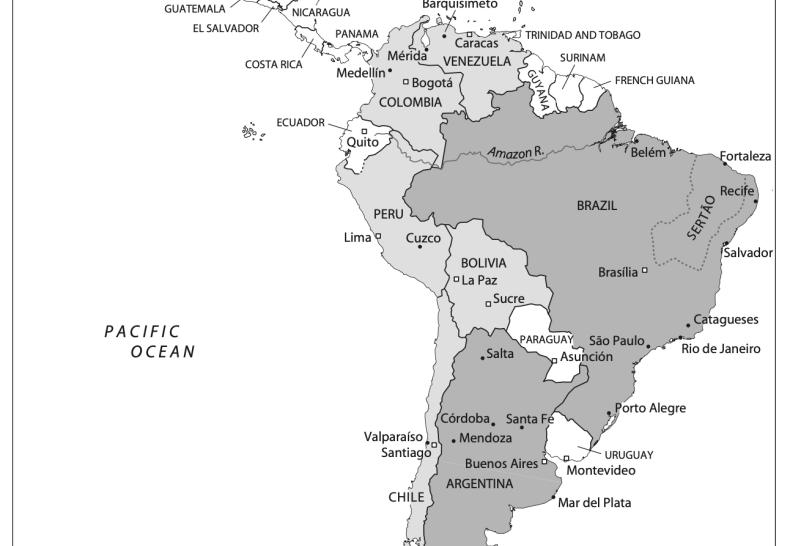
Latin American cinema has often been described as difficult to grasp. Grounded in the continent’s sociopolitical and cultural realities, as well as historical and contemporary experiences, it is also rooted in diverse national cinematic traditions and has established new forms of cinematic storytelling. Some of these innovations have been inspired by movements that resonated with specific moments in Latin America´s historical development, such that its cinema has often been perceived as both a result and a reflection of ongoing transformations in the Americas. At the same time, it has been closely connected to European and North American cinematic traditions, their aesthetics, and techniques, as the eight contributions in this special issue demonstrate.
The texts collected here share a common point of departure: the 27th International Bremen Film Conference, organized in cooperation between the University of Bremen and the communal cinema City46, which took place in 2023 in Bremen. Focused on audio-visual memory, it brought together an international group of academics and film practitioners, such as archivists, film scholars, film critics, historians, while also appealing to a broader public interested in Latin American cinema. Therefore, the conference presentations were accompanied by screenings of various feature films they engaged with. In this way, the dialogue between films and presentations sparked discussions that have, in turn, shaped the contributions published here. These conversations also addressed the relationship between cinema and political power that becomes apparent through the lens of political economy, representation, or spectatorship. Drawing on new research and offering innovative approaches, the contributions in this special issue reflect the dynamic and multifaceted nature of Latin American cinema today and comment on its engagement with the present and the past. Furthermore, all the contributions are informed by recent debates in film studies and history and draw on a deep and nuanced understanding of the development of Latin American cinema in the broader context of film history. Within this trajectory, the decades following the Second World War stand out in particular.
While Latin American cinema has generally been appreciated for offering perspectives on the continent and its people through the lenses of various filmmakers, it was probably the 1960s that brought renewed attention to the region’s film. Popular comedies and dramas of the 1940s and 1950s or the so-called Golden Age of Mexican cinema, were put aside in favor of a focus on New Latin American Cinema or Third Cinema, as articulated by the filmmakers Fernando Solanas and Octavio Getino in their influential manifesto in 1969.1 This cinema throve on the revolutionary fervor of the Cuban Revolution and constituted a militant form of filmmaking that advocated a particular kind of documentary realism. It was soon followed by a more sophisticated mode of cinematic narration, often described as “neobaroque”, which adopted a more aesthetically complex approach to narrating stories of oppression and exploitation. While this development highlights how cinema and dramatic political change went hand in hand in the Americas, comparative analysis shows that Latin American cinema has always been deeply embedded in the history and development of cinema itself: It has, in fact, always been “part of a century-long, triangular flow of moving images between Hollywood, Europe and Latin America”.2 The flow of moving images is also a flow of aesthetic ideas, cinematic narrations, and specific techniques that have reshaped the region’s audiovisual landscape. The body of work on the transnational in Latin American cinema has underscored this assessment and highlighted the impact of cinematic transnationalism on national film productions.3 Recent scholarship has expanded our understanding of Latin American cinema beyond its traditional national and ideological frameworks, emphasizing its intersections with global media flows, digital technologies, and, for example, decolonial thought.
More globalized forms of filmmaking and the recent rise of Latin American directors who, since the early 2000s, have worked in the United States, Spain, and the United Kingdom, have sparked interest not only in why but also in how these auteurs appeal to global audiences. These contributions have emphasized the intersections of Latin American cinema with global media flows and have also highlighted the importance of two important modes of transition, demonstrating that the shift from the national to the transnational is linked to the transition from the analogue to the digital.4 Again, technological changes have played a decisive role in the development of new modes of film production and reception, just as the emergence of portable cameras with synchronized sound was “instrumental in the creation of a documentarist mode of representation” central to Third Cinema.5 At the same time, the transnational has been a strategy of survival for Latin American national cinemas, enabling access to film markets beyond the region.6 Thus, the transnational speaks not only to the nature of the medium of film and film production, but also reflects the need for Latin American filmmakers to address broader audiences while ensuring that Latin American cinema continues to serve as a vital site for cultural expression, political critique, thematic and aesthetic innovation. The articles in this special issue highlight the importance of memory for Latin American cinema, underscore its use of analog cinematic and photographic materials to narrate stories, and show how it draws on its traditions and history to deal with Western modernity and conceptions of time.
The contribution by Paul Schroeder Rodríguez titled “Latin American Cinema in Ten Films and Five Modernities” is based on his presentation “Audio-Visual Memory: Latin America and Cinema” at the 27th International Bremen Film Conference. Like his book Latin American Cinema: A Comparative History, it examines the region’s cinema from the silent period to the digital age through the lens of comparative modernity studies. Schroeder Rodríguez identifies five discourses of modernity shaping Latin American cinema, each dominant in specific eras which have left their mark on ten films he discusses in depth. He concludes with an analysis of community-based cinema, which he defines as films made by and for communities, often rejecting national and colonial frameworks, and offers a call to action to support a possible future of indigenous-led Latin American cinema.
Jessica Stites Mor, in turn, explores the development of cinema over a longer period, using Argentina as a case study. She thus focuses on one of Latin America’s major film-producing nations, which has not only sustained a significant film industry but also fostered a vibrant filmmaking culture beyond commercial cinema. In “Argentine Filmmaking between Three Eras: Radical Cinema and South-South Political Connection”, she studies radical cinema across three decisive yet different periods of Argentine history. Drawing on Robert Darnton’s communication circuit theory, she examines the trajectory of filmmaker Jorge Giannoni to show connections between the experimental practices of 1950s and 1960s Argentine cinema and what she aptly coins as “the growing movement of solidarity between Latin America and the anti-imperialist and liberation movements outside the region”. Highlighting the critical role of internationalist solidarity in Argentine film activism, Stites Mor traces how traditions of film activism connect to more recent phenomena, including cine piquetero and forms of activist documentary filmmaking that emerged in the wake of the 2001 financial crisis.
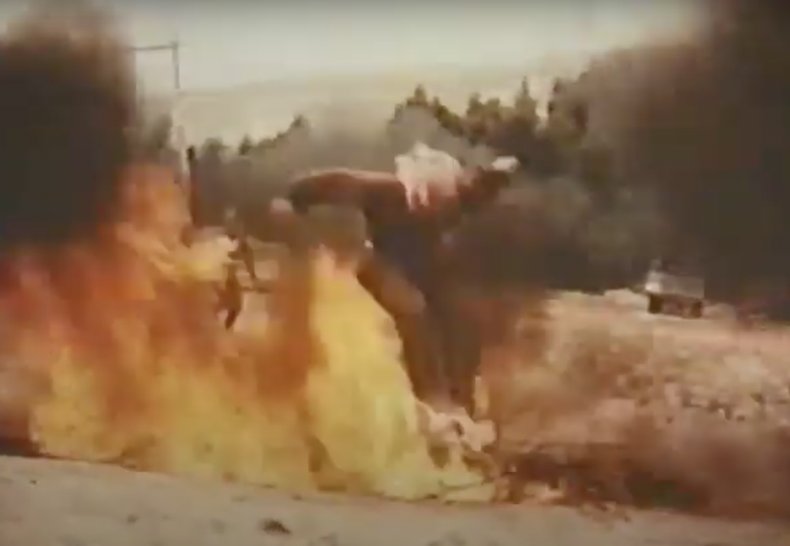
Christoph Seelinger focuses on Brazilian filmmaker Ivan Cardoso and takes his film NOSFERATO NO BRASIL (1970) as a point of departure. In his article “Nosferatu in Brazil: ‘The vampire’s fang (made of plastic) on the sclerotic jugular of ‘serious’ cinema’”, Seelinger shows how Cardoso, at the age of 19, draws on a long-standing tradition in Brazilian culture that instrumentalizes the figure of the vampire for political, socio-critical, and aesthetic purposes. After all, Cardoso is considered the master of Terrir, a genre which he invented. In this genre, he mixes laughter and horror, “terror” and “rir” (“to laugh” in Portuguese), while citing and parodying traditional horror tropes. Using a Super 8 camera, his half-hour, no-budget film parodies Friedrich Wilhelm Murnau’s NOSFERATU (1922) and transfers its eponymous main character to Rio de Janeiro’s Copacabana to great effect. Thus, the often-praised masterpiece of Weimar cinema is used to comment on Brazil under authoritarian rule and growing state violence. Modernity, it seems, is a menace that cannot easily be dismissed.
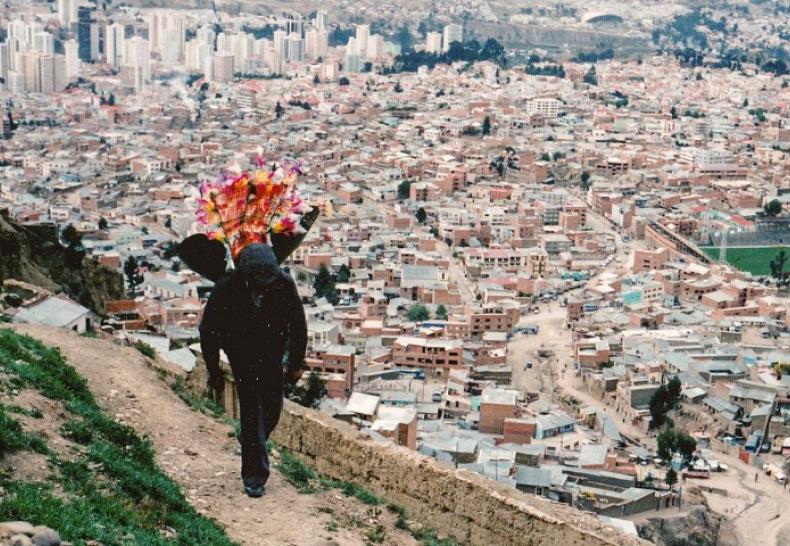
Karin Harrasser’s article “Nobody Alone and the Camera for Everyone. Third Cinema and Versions of Grupo Ukamau” traces the history and oeuvre of the Bolivian Grupo Ukamau and its indigenous filmmakers, whom she considers groundbreaking in many respects. When its members decided to make feature films, they rejected not only commercial, or so-called First Cinema, but also auteur-driven arthouse film, that is, Second Cinema. Although the term “Third Cinema” may be considered misleading given the controversies surrounding it, as Harrasser herself notes, she nonetheless refers to the films of Grupo Ukamau as examples of this movement to foreground the historical context of this mode of filmmaking. Thus, the group not only anticipated but also pioneered the search for a decolonial, anti-patriarchal, emancipatory cinematic language and practice, including the rejection of established modes of production and distribution. The group also engaged with aesthetic strategies rooted in popular Andean culture that extend beyond folklore and superficial effects. Grupo Ukamau eventually developed participatory filmmaking and re-enactment to include what Harrasser calls “participation as friction”, while also underscoring the often-overlooked role of women through the adoption of a feminist perspective.
In a similar vein, Márton Árva analyzes how Western temporal regimes affect filmmaking and tend to be challenged by feature films that engage with subaltern historical narratives. In “Memories of Encounter and the Encounter of Memories: Temporal Horizons in PARA RECIBIR EL CANTO DE LOS PÁJAROS (1995) and TAMBIÉN LA LLUVIA (2010)”, Árva offers a comparative analysis of films by Grupo Ukamau and Spanish director Icíar Bollaín Pérez-Míguez, approaching them through a decolonial framework. Both films explore the story of a film crew working in contemporary Bolivia on a historical epic about the conquest of the Americas. Árva examines the effects of different formal, narrative, and conceptual approaches to temporality and their political significance. By paying special attention to the interplay between the film-within-the-film and the present time of the shooting, Árva demonstrates how the two works shed light on the key differences in their conceptions and representations of modern colonial history.
Seungjoo Lee´s article “Workings of Postmemory in Twenty-First Century Argentina: Cecilia Kang’s PARTIÓ DE MÍ UN BARCO LLEVÁNDOME (2023) and HIJO MAYOR (2025)” highlights Kang’s experience as a filmmaker of the ethnic minority of South Korean descent in Argentina. Born in 1985, two years after the end of Argentina’s last military dictatorship, Kang’s trajectory furthermore illustrates common challenges contemporary Argentine filmmakers face under the current political and economic climate. At the same time, her background has presented not only specific challenges but also new opportunities in both national and international film industries. As Kang’s films focus on people around her, they have resonated with international audiences and markets, particularly through transpacific postmemories that have emerged in Argentina as an unexpected site for addressing the trauma of the so-called ‘Comfort Women.’ In her article, Lee examines the steps Kang has taken to carry out her projects PARTIÓ DE MÍ UN BARCO LLEVÁNDOME (2023) and HIJO MAYOR (2025), and highlights potential breakthroughs in the globalized film industry and its ideology as reflected in Kang’s development as a filmmaker.
Memory is also at the center of Charlotte Praetorius’ contribution “Home Movies and Family Archives in Latin-American Documentary Films”, which examines how contemporary Latin American documentary filmmakers use family archives and common audiovisual materials, such as photographs and home videos, to reconstruct personal and collective histories shaped by political trauma. Because the personal and the political converge, the use of personal memorabilia is a common and effective strategy of the films discussed in this article. Praetorius identifies this use of analog cinematic and photographic legacy of the twentieth century in a variety of contemporary works. These films engage with recent traumatic national histories, such as the military dictatorships in Argentina or Chile and the disappearance of individuals, as well as more personal stories of memory loss. Praetorius analyzes recurring narrative strategies, examines the visual treatment of analog materials, and reveals their broader aestheticization. The article also highlights the fragile state of amateur film preservation in Latin America, an alarming and troubling condition.
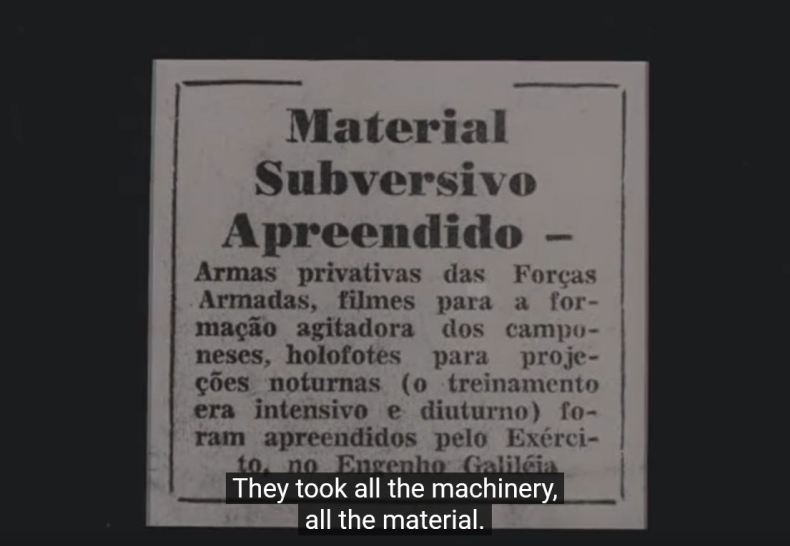
Historical violence and the ways in which films are involved in its remembrance and representation are the main interest of “Transporting Memory: CABRA MARCADO PARA MORRER as an Audiovisual Infrastructure for Remembering” by Maximilian Rünker. In his article, he argues that the documentary CABRA MARCADO PARA MORRER (Eduardo Coutinho, 1984) employs specific methods to represent violence in recent Brazilian history under authoritarian rule. At the same time, Rünker highlights that this documentary most significantly deals with rupture and “re-membering” as a way of healing and reconstitution. Interweaving its own production history with the story of a peasant family in rural northeastern Brazil, the film explores how both the family and the filmmaking process are affected by authoritarian rule through intervention, execution, and disintegration. The article further analyses specific audio-visual techniques that bridge temporal distances, foregrounds the use of audio recordings, and discusses other intrinsic qualities of this remarkable film.
In turn, Markus Ruff offers insight into his experience as a film archivist in Berlin with unique access to Cuban revolutionary film. In his article “Considerations on Living Archive – Before and After”, he reflects on the time before the project “Living Archive – Archive Work as Contemporary Artistic and Curatorial Practice” (2011–2013). The after in the title refers to the developments that followed, when “Living Archive” became a concept extending beyond the project. This concept describes an archival practice that recognizes and further develops the significance of archives in relation to both the present and potential ideas in the future. This contribution can also be read as a plea to open archives, allowing them to remain dynamic and responsive.
Delia González de Reufels
Suggested Citation: González de Reufels, Delia. “Issue 8: Audio-Visual Memory and Latin American Cinema. Editorial.” In Research in Film and History 8 (2026). https://doi.org/10.25969/MEDIAREP/24909.
- 1
The text has widely been referred to: Fernando Solanas and Octavio Getino, “Towards a Third Cinema”, [1969] July 7, 2019, https://files.commons.gc.cuny.edu/wp-content/blogs.dir/8374/files/2019/08/Towards-a-Third-Cinema-by-Fernando-Solanas-and-Octavio-Getino.pdf.
- 2
Paul A. Schroeder Rodríguez, Latin American Cinema. A Comparative History (Oakland: University of California Press, 2016), 2, 294f.
- 3
See for example: Deborah Shaw, The Three Amigos. The Transnational Filmmaking of Guillermo del Toro, Alejandro González Iñárritu, and Alfonso Cuarón (Manchester: Manchester University Press, 2013); Dolores Tierney, New Transnationalisms in Contemporary Latin American Cinemas (Edinburgh: Edinburgh University Press, 2018).
- 4
David M.J. Wood and Gabriela Vigil, “Transnational, Digital, Mexican Cinema? Fogo (Yulene Olaizola, 2012) and Placa Madre (Bruno Varela, 2016),” Journal of Latin American Cultural Studies 28, no. 4 (2019): 503–525.
- 5
Schroeder Rodríguez, Latin American Cinema, 4.
- 6
Tamara Falicov, The Cinematic Tango. Contemporary Argentine Film (London: Wallflower Press, 2007).