Living Archive – Before and After
Table of Contents
Latin American Cinema in Ten Films and Five Modernities
Argentine Filmmaking between Three Eras
Nosferatu in Brazil
Nobody Alone and the Camera for Everyone
Memories of Encounter and the Encounter of Memories
Workings of Postmemory in Twenty-First Century Argentina
Home Movies and Family Archives in Latin-American Documentary Films
Transporting Memory
Living Archive – Before and After
This is an Open Access article distributed under the terms of the CC BY 4.0 License.
Suggested Citation: Ruff, Markus. “Living Archive – Before and After.” In Research in Film and History 8 (2026). https://doi.org/10.25969/MEDIAREP/24912.
Inventing titles is enough of a challenge. This is especially true when new ones have to be invented again and again, even though the subject in question – in this case an archive – remains the same. Over the years, this can lead to certain redundancies. Yet, the challenge of creating a new title encourages us to imagine new attributes, opens up broader perspectives on it, and potentially impacts the subsequent practice: Living Archive, Animated Archive, Visionary Archive – these are some titles of projects by Arsenal Filminstitut, and there are more.
The title of this article refers to what came before the “Living Archive – Archive Work as Contemporary Artistic and Curatorial Practice,” a project that took place from 2011 until 2013. The after is everything that followed since then when “Living Archive” manifested itself as a concept beyond the project. It describes an archival practice that recognizes the significance of an archive in relation both to the present and potential future ideas. The project brought about a shift in perspective regarding the archive, one that arose from the practice itself; an archive that, historically speaking, had been constituted as a collection of film prints for distribution, gained significance in terms of the preservation of film heritage. What initially marked a turning point for the archive subsequently had an impact on other areas of the institution as well.
In early 2025, Arsenal relocated to Wedding, a district of Berlin, where the analog film holdings had already been moved ten years ago and are now housed in the silent green Kulturquartier. The fact that the heritage building of the silent green is a former crematorium located next to a cemetery occasionally triggers a smile when mentioned in connection with “Living Archive.”
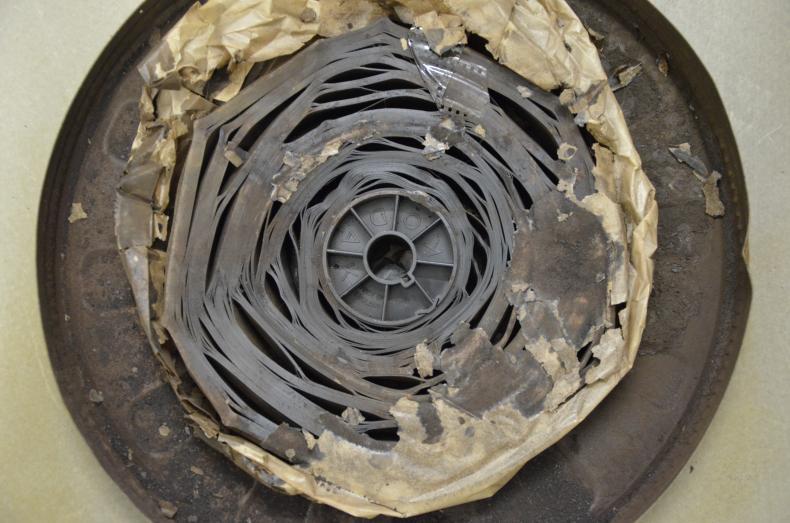
What makes one smile, however, also points to a bitter reality: the chemical decay of cellulose-based film materials, nitrate film and acetate. The climatic storage conditions, temperature and humidity, determine when the chemical decay will become a threat for a film element. In short: the colder and drier the better. Even if decay is inherent to these materials, hence their eventual loss, the time span can vary significantly between a few decades to centuries.
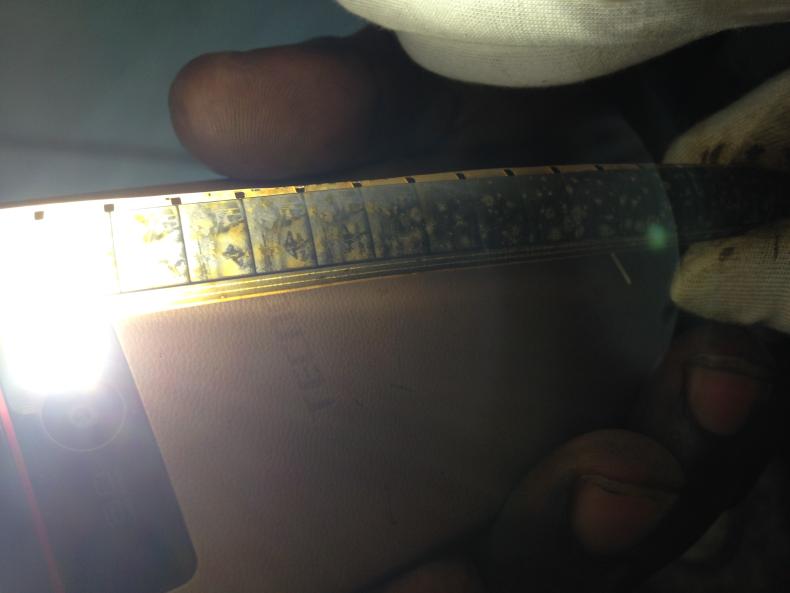
The picture above shows one reel of a 35mm positive print of SHAIHU UMAR (NGA 1976) by Adamu Halilu. This film print was produced on acetate film base and can be considered lost. The so-called vinegar syndrome caused the layers of the reel to stick together in blocks. During the chemical decomposition of an acetate film base, acetic acid is released, which gave it its name. The place where this reel was found will be discussed later.
© Marian Stefanowski
Depending on the possibilities for film storage—the geographical location of an archive plays a significant role in that—, the vinegar syndrome will sooner or later become a (pressing) problem for an archive, and active preservation is needed to ensure the survival of a film. Nowadays, following the shift from analog to digital, preservation mostly involves the use of digital technologies, which is also necessary to ensure a film’s accessibility. Only a small number of cinemas are left that can still project analog film prints.
The history of the Arsenal is a good starting point before going into detail about individual projects, as it shows how the archive practice has developed organically out of a curatorial practice and to what has become characteristic of the “Living Archive.”
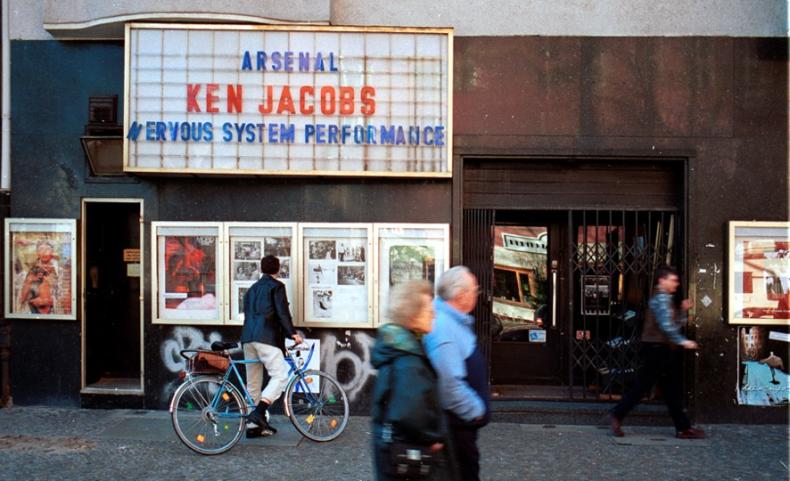
The association was founded in 1963 under the name Friends of the German Cinematheque (Freunde der Deutschen Kinemathek). The name reflects the relationship to the Deutsche Kinemathek, which had been founded in Berlin shortly before in the same year with the aim of preserving films and making use of its collection. The mission of the “Friends,” on the other hand, was to show films and thus make them accessible to the public — including films from the archive of the Deutsche Kinemathek. In the beginning, film screenings were organized at various locations in Berlin. From 1970, the association had its first permanent cinema, the Arsenal Cinema in the district of Schöneberg in Berlin.
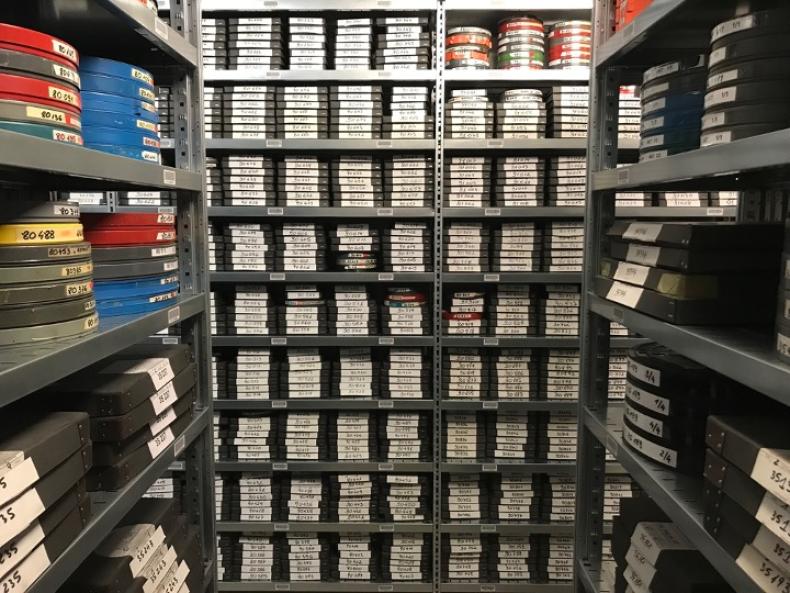
In 2000, the institution moved to Potsdamer Platz, where it offered a curated program in two cinemas. Arsenal has been independently organizing the Berlinale Forum section since its first edtion in 1971 and the Forum Expanded since 2006. Every year, a large number of films from the festival program is selected for the in-house distribution arm. In addition, Arsenal offers film education activities for children and young audiences and organizes workshops and seminars such as the Arsenal Summer School and the Analog Workshop. Today, the archive comprises a collection of around 10,000 analog film prints as well as a constantly growing number of digital copies, around three quarters of which are international productions.
© Markus Ruff
The archive has grown parallel to the institution’s various activities. Individual focuses can be identified in the film collection, which can be linked to a specific period or associated with individuals who have worked at or with the institution. Films got into the archive at the filmmakers’ own request, and collections were given a place in the archive to protect them from censorship and/or destruction (e.g. due to silver extraction).
A considerable and important collection of experimental films exist in the archive. To give one example, due to the curatorial work of Alf Bold, the cinematic work of US performance artist Jack Smith is part of the collection. One of Arsenal’s first archive projects “LIVE FILM! JACK SMITH! Five Flaming Days in a Rented World” (2009) posed the question of how to deal with a cinematic legacy that is inextricably linked to the artist’s live performances. The curators Stefanie Schulte Strathaus — the current artistic director of Arsenal — as well as Susanne Sachsse and Marc Siegel invited more than 50 international artists and academics to Berlin to view and discuss together Smith’ oeuvre, and to develop new works, texts and performances related to it. The closing program included Smith’ films, presented in a set of new film prints that were acquired thanks to the project.
© 2013 b_books
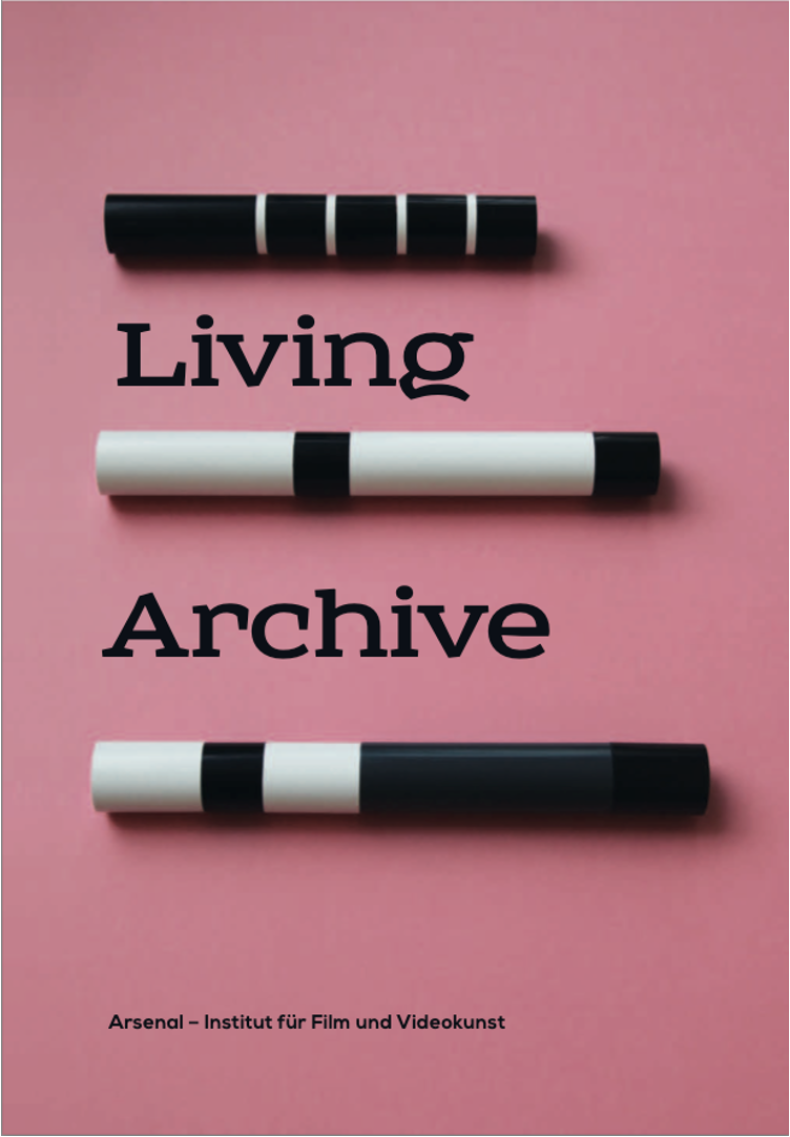
Two years later, the entire collection became the resource of the project “Living Archive – Archive Work as Contemporary Artistic and Curatorial Practice”. Over a period of two years, 38 curators, filmmakers, artists, academics and other researchers were invited to develop projects based on the film collection. The idea was to initiate projects that would carry out archive work as part of their development, combining research, preservation and publication in the context of a contemporary curatorial and artistic practice. The participants were provided with a budget for the realization of their individual projects. Films from the collection were digitized or digitally restored, existing restorations and new film prints could be purchased. New works were produced, and books and DVDs published. In June 2013, the project ended with an extensive festival program at Arsenal Cinema and an exhibition at KW Institute for Contemporary Art, accompanied by the publication of the project catalog.
© 2013 b_books
© Markus Ruff
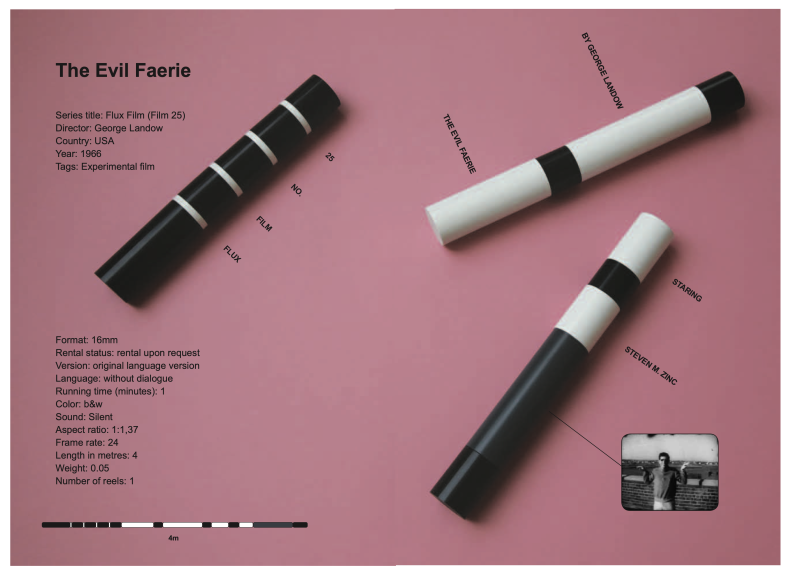
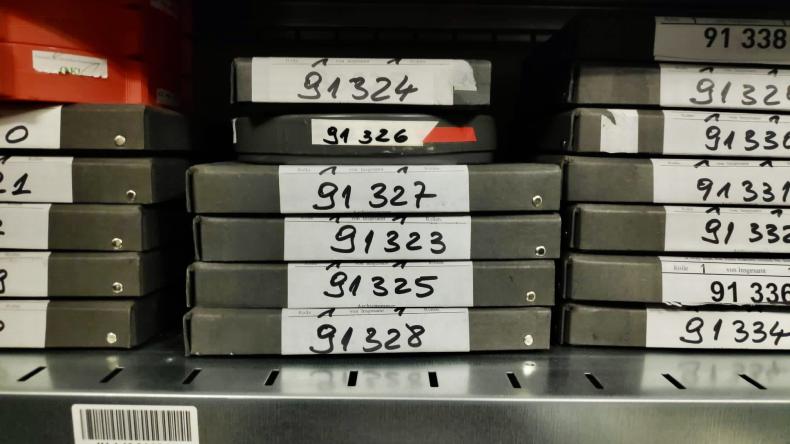
The cover of the catalog Living Archive – Archive Work as Contemporary Artistic and Curatorial Practice features objects by artist and curator Martin Ebner. His project “Film without Film” reflects on the medium film, its analog form and development towards a digital existence. The resulting objects return, so to say, to the physical object that takes up space and contains time. Ebner turned his attention to prints from the collection of experimental films. The objects on the cover are a translation of THE EVIL FAERIE, a film by George Landow (USA 1966). This 16mm positive print is 4 meters long, which corresponds to approx. 22 seconds, and weighs 0.05 kg. Its inventory number is 91323.
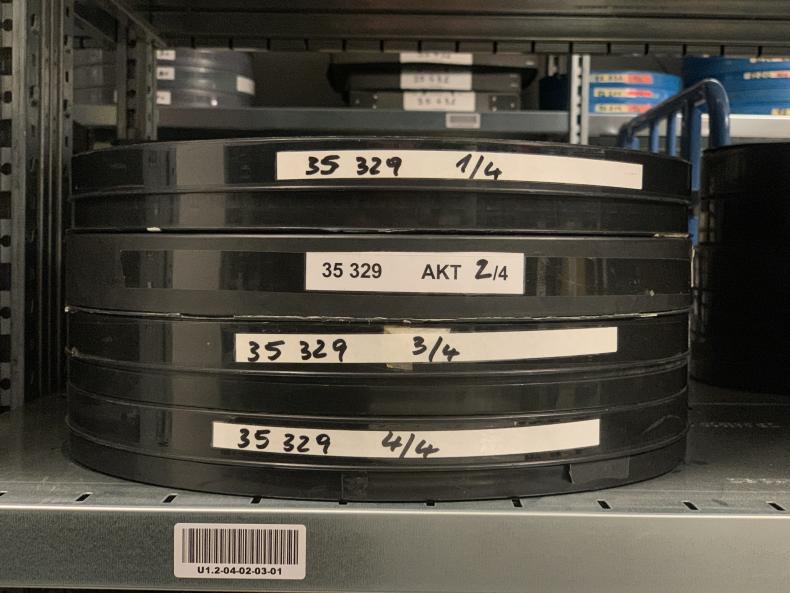
A film print, the physical item and its properties, which Martin Ebner translates into a new spatial experience, has a concrete size in the archive, which varies significantly depending on the film gauge, 8mm, 16mm, 35mm, to mention the most common.
© Markus Ruff
Every item in the archive is unique and has its own history inscribed into it over time. Generally speaking, a camera negative is the original, the master, of which duplicates, intermediate negatives and positives can be produced, before the final positive print designated for projection is made. The workflow and the intermediate steps can vary depending on the production. It is important to consider that in the analog process, as opposed to digital copying, a loss of quality in terms sharpness, detail, and contrast is inherent to each photochemical (duplication) copying step, possibly also accompanied by an introduction of optical defects that did not exist in the source material. Once processed, each element has its own life. Even if two distribution prints look alike, both have their own trajectory, traces of wear and tear through handling and projection are inscribed into the material, they travel to different places and are exposed to the specific storage conditions.
In 1990, a 35mm positive print of the international language version with English subtitles of DE CIERTA MANERA by Sara Gómez (CUB 1974/77) was acquired for distribution. The film print is 1,991 meters long, which corresponds to 73 minutes, and weighs 15.8 kg. Its inventory number is 35329.
© Markus Ruff
© Markus Ruff
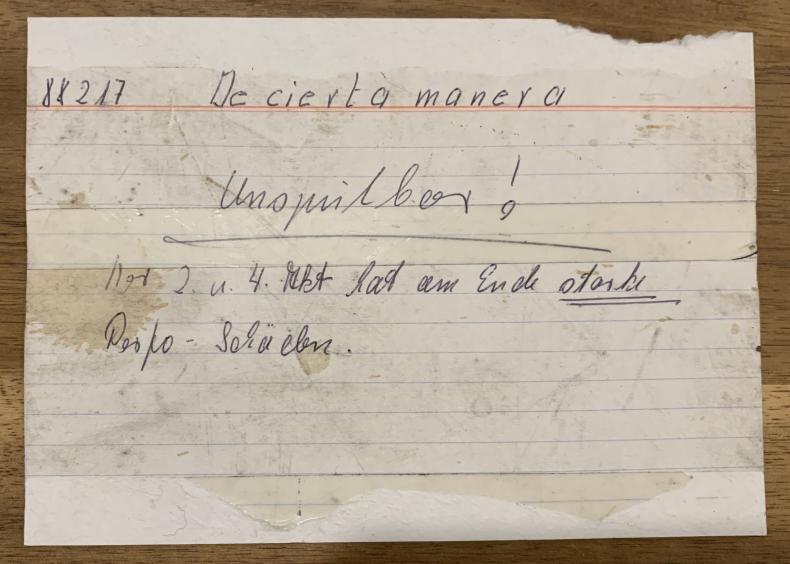
Another 35mm print of the film was acquired already in 1977 when DE CIERTA MANERA was screened as part of the Berlinale Forum program. In this case, it was the original language version with German subtitles. Only one reel out of four still exists in the archive.
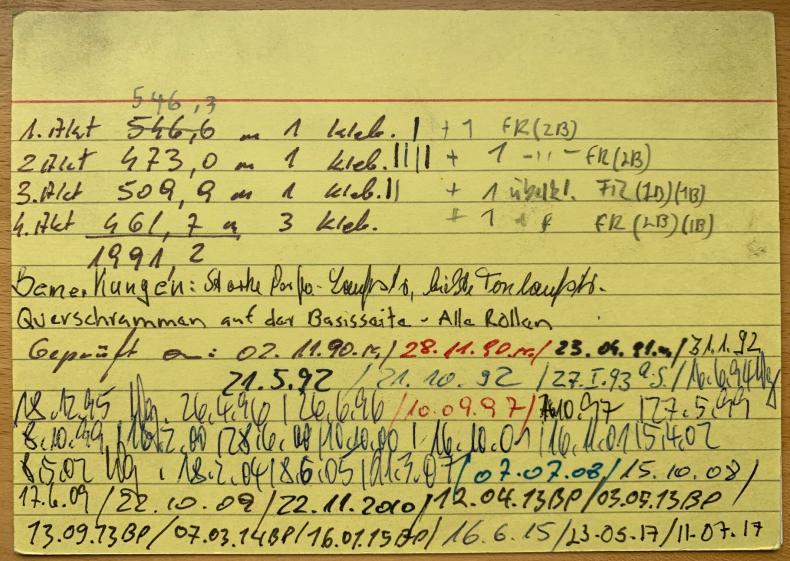
There is a paper record for each print in the archive, on which the film condition is noted. The condition of the 1977 print is summarized as “unspielbar” (German for “unprojectable”). That a print is “unprojectable” can have various reasons. In this case, however, it can be assumed that the print has simply been worn out over the years from projection.
The paper record of the 1990 print (Figure 8) gives an idea about what was previously described as the life of a film copy. The dates when the print was checked is documented at the bottom. This is done after a projection, i.e. each entry marks a movement of the print. The length in meters is mentioned at the top, and this property of a print may well change with the number of splices over the years.
For the “Living Archive” festival in June 2013, artist and curator Florian Zeyfang curated a program entitled “Tears and Splices — Cuba and the Europeans.” The intro text reads: “Based on a tear in the film LA BATAILLE DES DIX MILLIONS (CUB 1970) by Chris Marker, the program observes Europe’s projections onto revolutionary Cuba”. The featured films were by Sara Gómez and her close companion Nicolás Guillén Landrián, as well as by Chris Marker and Theodor Christensen.
Only two of the films shown in the program exist in Arsenal’s archive: LA BATAILLE DES DIX MILLIONS and DE CIERTA MANERA. With the title “Tears and Splices” Zeyfang also pointed to the fact that there are gaps in the collection, posing the question: Why is there a print of DE CIERTA MANERA, but none of Gómez’ short films? The only answer that can be given is that Arsenal does not pursue a collection policy aimed at representing complete filmographies of filmmakers. This does not mean, of course, that there cannot be such examples.
© Instituto Cubano del Arte e Industrias Cinematográficos (ICAIC)
© Markus Ruff
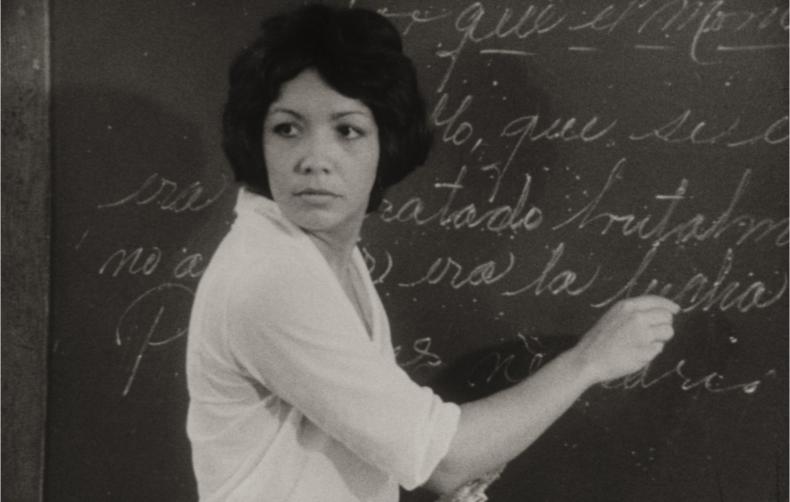
DE CIERTA MANERA was the first Cuban feature-length film by a female director and also Gómez’s last film. She died in 1974 during the completion of the film. The film describes life in a poor neighborhood in post-revolutionary Cuba. Contrary to the expectations, the values and role models of the residents have not changed with the construction of new apartments. Yolanda, a primary school teacher, and Mario, who works in a bus factory, fall in love. While Yolanda strives for a pedagogical approach that integrates marginalized pupils and is met with a lack of understanding from colleagues and parents, Mario finds it difficult to break away from patriarchal role models. Their conflicting ideas also put their relationship to the test and at the same time critically reflect the social transformation process.
Peter B. Schumann, at the time a member of the Berlinale Forum selection committee, watched the film at ICAIC – Instituto Cubano de Arte e Industria Cinematográficos in Cuba, and invited it to the 1977 festival program. The premiere in La Habana followed shortly afterwards in fall. Extensive material was edited and provided in the Forum catalog, containing press clippings, interviews with crew members, as well as texts on marginalism, emancipation and the Cuban revolution to contextualize the film.
Zeyfang’s “Living Archive” project and the fact that the 35mm print from Arsenal’s archive was frequently requested nationally and internationally over the years (it seemed that this print is the only accessible one) ultimately led to the decision to digitally restore the film. However, it took several years to secure the necessary funding, which was finally made possible in 2019 as part of the project “Archive außer sich.” During the project it turned out that Gómez’ short films were being restored by the Vulnerable Media Lab at Queen’s University in Canada. The gaps, to come back to Zeyfang’s point, are filled by many.
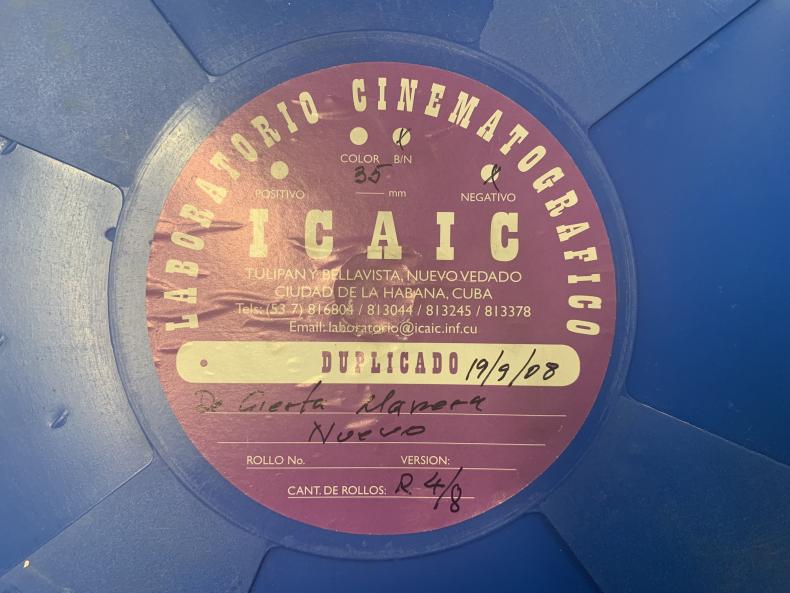
The ICAIC agreed to provide a 35mm image duplicate negative and optical soundtrack of DE CIERTA MANERA from their archive for the restoration. The unpacking of the shipment in Berlin was followed by a surprise: according to the information on the film can, these elements were produced in 2008, whereas we had expected to receive the negatives from the 1970s. Unfortunately, it was impossible to find out whether earlier generations of the film still exist. In the 1990s, Cuba suffered an electricity shortage which made it impossible to operate the air conditioning system. This had a severe impact on the condition of the analog film material, which is why many items in their archive had to be duplicated for preservation purpose in the early 2000s.
© Markus Ruff
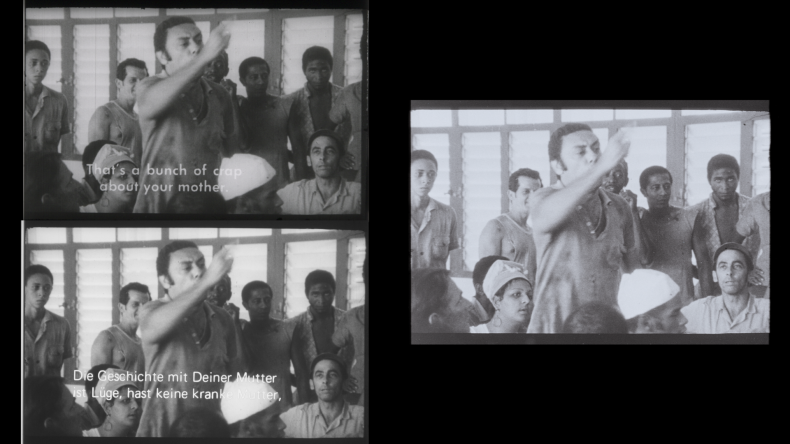
At the beginning of the restoration, all three available 35mm source materials were compared with each other: the incomplete positive print from 1977, the complete print from 1990 and the complete duplicate negative from 2008. The test made it clear that the latter proved to be the best source material in terms of completeness, image detail and contrast. In the course of the project, two more film prints could be located, one at Contemporary Films in the UK and one with Brown University in the USA, however both in 16mm, i.e. reductions of the 35mm international version.
For various reasons, film prints are not the most suitable source material for the preservation of a film, not least in the case of subtitled prints. However, research has led to the discovery of several film prints in Arsenal’s archive which are unique versions or the only existing material of a film. And it is clear that this applies to film heritage in general.
© Markus Ruff
What connects films in the archive, which narratives are known and which are still to be discovered, which alliances already exist and which connections still need to be made? Artist and filmmaker Filipa César writes about such unknown connections between archives—connected through one film and its images—in her contribution to the catalog Living Archive:
August 2011. I entered the Living Archive project through an emergency exit. At a dinner with Avi Mograbi, I recounted my encounter with an archive earlier that year – the existence of a room full of films deteriorating in Bissau. Having spoken with the Guinean filmmakers Sana na N’Hada and Flora Gomes, I knew this archive probably contained the few remnants of the birth of Guinean militant film practice, produced in the context of the war against Portuguese sovereignty in the early seventies and its aftermath. Since my return from Bissau, I had been trying to get institutions in Portugal interested in taking care of the material. Avi immediately told me to get in touch with Stefanie Schulte Strathaus. […]
By that time I had already drafted a potential action with the working title “Arquivo Animado,” (Animated Archive). […] I noticed the coincidental analogy between this draft title and the title of the Arsenal project. I thought about what the words meant: Living and Animated. “Living” could suppose that it has never been dead, while “animated” could connote re-animation – something dead that is resurrected by external activation. […]
Beginning of November. Stefanie asks me to join a “Living Archive” meeting in order to present the project to the participants. She explains to those present that the list of participants was complete and the funding distributed. However, if someone were interested in incorporating my project into an existing project they should raise their hand. […]
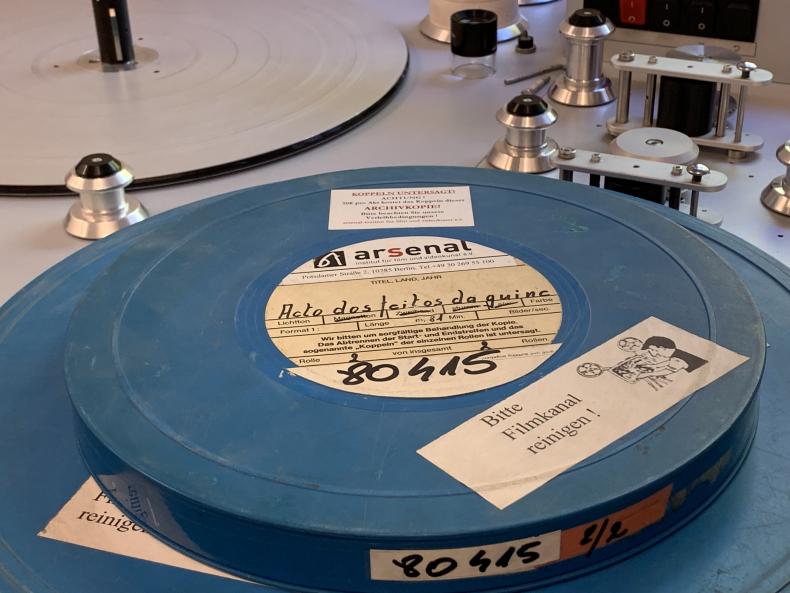
The curator Tobias Hering – who, following the meeting, invited me to work with him – had the film ACTO DOS FEITOS DA GUINÉ by Fernando Matos Silva on his list of Arsenal films dealing with decolonization processes – the subject of his research. We watch it together on the flatbed editor. The film is new to both of us, and it is the only film dealing with Guinea-Bissau at the Arsenal archive.
© courtesy of Filipa César
The statues that I remember seeing in Flora Gomes’ Mortu Nega and Chris Marker’s SANS SOLEIL (one of which made an appearance in my own film THE EMBASSY, shot in early 2011 in Bissau) appear here once more. Shown as part of the Berlinale Forum in 1981, Matos Silva’s film is a sort of chronicle of the fight for independence in Guinea-Bissau and itself works with archival material.
January 2012. Together with the Angolan film technician Victor Lopes from the Portuguese Cinematheque who has volunteered to join me, I make a trip to Bissau. We notice that the film ACTO DOS FEITOS DA GUINÉ is one of the films making up the corpus in Bissau. It lives between worlds, incorporated into three archives, which form a line – Bissau, Lisbon, Berlin: one disintegrating and smouldering; one archived in the stopover city, which is also the former centre of colonial power over Portuguese Guinea; the last – situated in the city where in 1884–85 colonial powers re-distributed and regulated their shares of Africa at the Berlin Conference. […]
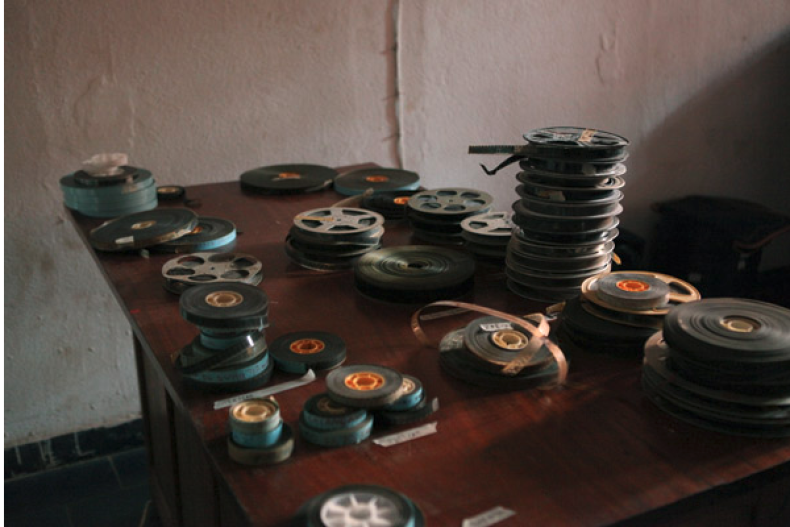
12th April 2012. Guinea-Bissau suffers another coup d’état. Despite the political instability, the German Federal Foreign Office, after receiving the report on the catalog we produced, agrees to support the digitisation of the archive, while Arsenal commits to the coordination of the process. In June 2012, Natxo Checa and I pick up the 94 film rolls and bring them to Berlin for digitization.1
The “Animated Archive” project, which was funded by the Federal Foreign Office as part of their Cultural Preservation Program, allowed the digitization of the film holdings of the national film archive of Guinea-Bissau, INCA – Instituto Nacional de Cinema e Audiovisual. After digitization, the analog film material was sent back to Bissau together with a copy of the data and a laptop for viewing purposes. Only a few film reels remain at Arsenal for the reasons of conservation at the request of the filmmakers Sana na N'Hada and Flora Gomes. The INCA archive includes 16mm and 35mm material. With the exception of four completed films, most reels contain unedited image and sound material, which posed various challenges and questions regarding how to make the archive accessible in the future.
© courtesy of Filipa César
© Markus Ruff
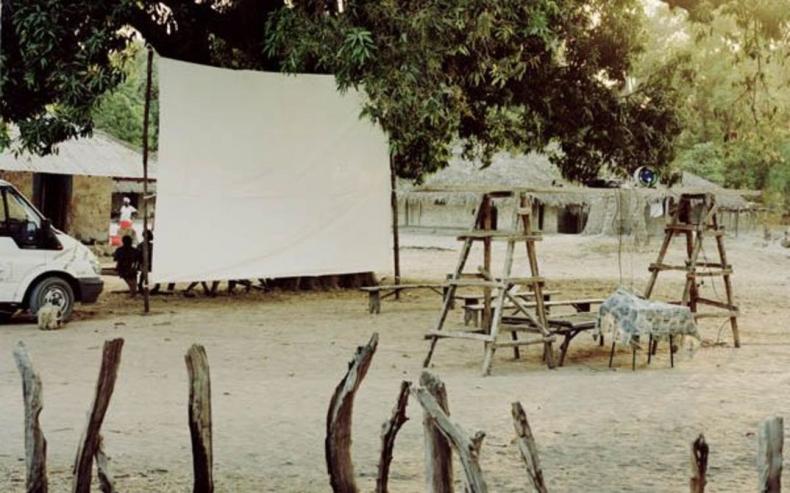
As the title “Animated Archive” suggests, the digitization of the image and sound material was the first important step to safeguard the material, with the objective of enabling future projects and initiatives to engage with the archival footage thereafter. In 2013, the project “Visionary Archive” started a year later and was dedicated to phases and facets of “African” cinema, involving film archives at five locations. Part of it was the Mobile Cinema project “From Boé to Berlin – A Mobile Laboratory on the Film History of Guinea-Bissau” by Filipa César in collaboration with Suleiman Biai, Sana na N'Hada and Flora Gomes.
The mobile cinema format is linked to a practice already introduced in various colonial African countries before being taken up again in the post-colonial context, including in Guinea-Bissau, under new auspices. Sana na N'Hada was himself involved in attempts to organize a mobile cinema at the end of the 1970s to show the films and newsreels being produced at the time. The project was based around the Cuban model of the “Departamento de Divulgación Cinematográfica,” the Film Dissemination Department of the ICAIC, which he and Flora Gomes got to know during their studies in Cuba where they were trained as filmmakers in order to document the struggle for independence in Guinea-Bissau. The mobile cinema “From Boé to Berlin” toured through various places in Guinea-Bissau and ended in Berlin. The journey and events are documented in the film SPELL REEL by Filipa César which premiered at the Berlinale Forum in 2017. This film also became part of Arsenal’s archive.
In 2016, the film critic, filmmaker and founder of the Lagos Film Society Didi Cheeka and Marc-André Schmachtel, the then director of the local Goethe-Institut, came across film cans of the former National Film Unit (nowadays Nigerian Film Corporation – NFC) by chance while searching for a cinema space. As they had no way of checking the materials, they approached the Arsenal. Together with Stefanie Schulte Strathaus, we traveled to Lagos, equipped with simple equipment for checking film material.
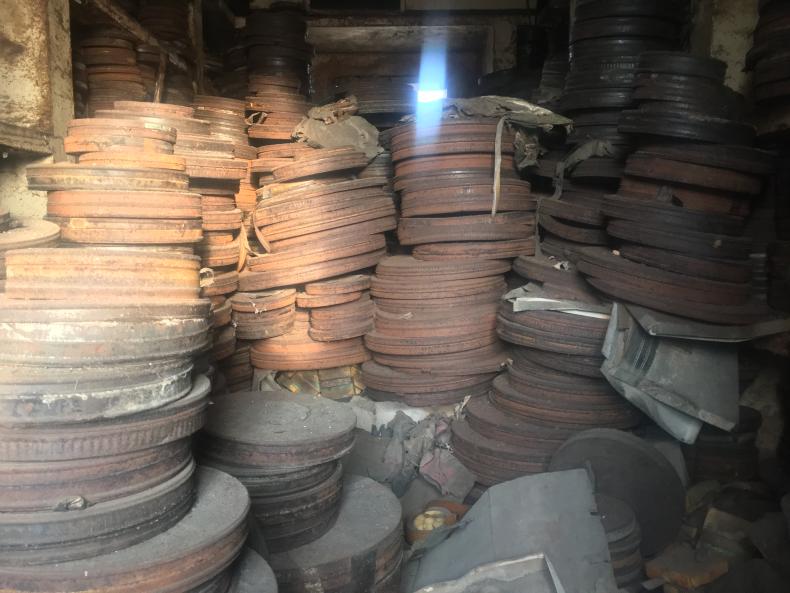
The photo above was taken in the room in which the reel of SHAIHU UMAR was discovered, the one mentioned at the very beginning. There were two such rooms full of rusty cans at the NFC premises in Lagos. With the permission from the then managing director, we inspected some of the film cans, having the security constantly breathing down our necks. The rusty cans were obviously of no value to anybody. However, the fact that we were interested in them caught their attention.
© Markus Ruff
We therefore tried to get them to join our team and were successful. The main aim was to get a rough idea of the condition and determine whether any material could be saved. To do this, we had a look at the beginnings of the reels, making sure not to expose the material to the dusty environment and writing down what could be deciphered on the frames.
One film can made Didi Cheeka let out a big “Oh!” In his hands he held SHAIHU UMAR, a film thought to be lost. It is based on the novella with the same title by Nigeria’s first Prime Minister, Abubakar Tafawa Balewa, which tells a story about the trans-Saharan slave trade through a mother-son relationship and which is still very well known today. As it turned out later, SHAIHU UMAR was a very prestigious production and celebrated its premiere at FESTAC ’77, the Second World Black and African Festival of Arts and Culture, in Lagos.
Since only 35mm positives prints in the same poor condition could be found at the location in Lagos, a visit to the National Film, Video and Sound Archive in Jos was arranged for the following day. It turned out that the majority of the archive holdings had been relocated there in the 1990s due to the better climatic conditions. The then head of the archive, Esther Jemila Chukwuma, was very welcoming and appreciated our interest in the film collection. With her help, we searched through parts of the archive and came across some very well-preserved negatives. Before our departure the next day, she told us that she had waited many years for “these dry bones to be brought back to life” — a statement that associated our visit with her great hope for the future of the archive.
Before returning to Berlin, we drew up a three-point plan to “re-animate” the archive which had not seemed to fulfill any function for several years. The first goal was to digitally restore the film SHAIHU UMAR — at the time, without knowing whether the film could be reconstructed at all —, then to present it at the Berlinale Forum in order to generate international attention and convince stakeholders of the value of the archive holdings. Lastly, since, unlike in Guinea-Bissau, the archive and the former film laboratory of the NFC provided an infrastructure at the Jos location, a funding application was submitted to the German Foreign Office to install a film scanner on site and to hold workshops for film handling and scanning.
© Markus Ruff
Everythings was eventually realized. Further partners have since joined this new cooperation project. On the initiative of the Goethe University in Frankfurt the first archival study program on the African continent was inaugurated in Jos in 2019. Modeled after the study program “Film Culture” at the Goethe University and financed by the DAAD, the National Film Institute (department of the NFC) and the University of Jos are jointly offering the Master’s degree in “Film Culture and Archival Studies.”
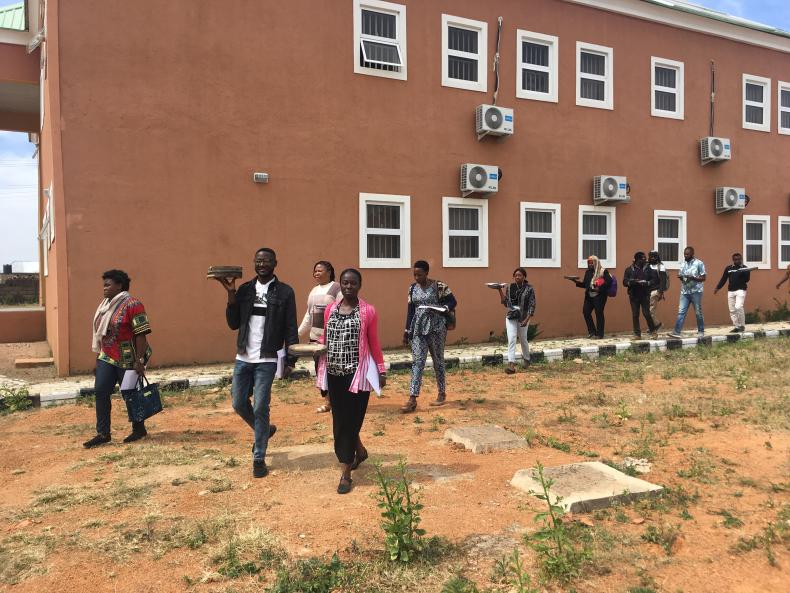
The project also includes training of archive staff from the National Film, Video and Sound Archive at Arsenal and the DFF – Deutsches Filminstitut & Filmmuseum in Frankfurt, as well as conducting workshops in Jos. The photo above was taken in December 2019. The seminar participants were asked to fetch a film can from the archive and to work with this material on the various tasks throughout the workshop. Access to the archive had not been given for many years and led to the archive being forgotten, consciously or unconsciously. To see a new generation of archivists coming out of the vaults with a film can in their hands, is the great achievement that has come out of years of negotiations at various levels and which no one could have foreseen when Didi Cheeka discovered that one reel of SHAIHU UMAR.
“Reclaiming History, Unveiling Memory” was the title of Didi Cheeka’s presentation at the Berlinale Forum Expanded 2017. For the program he wrote:
It’s one thing when war causes the destruction of memory. But, there’s a hidden war—when memory dies through a more or less conscious forgetting. How do we tell our history when we migrate from our memory? One year ago, we entered history through a time rip — the chance discovery of hundreds of rusted cans of films in the abandoned rooms of Nigeria’s old Colonial Film Unit in Lagos. This discovery led to a huge find: approximately 10,000 cans of films in relatively good condition at the National Film, Video and Sound Archives in Jos. Their sudden presence triggered questions: What is the value of having a film archive and what use could there be for it? What is involved in getting access to this film archive? What institutional and infrastructural conditions are necessary to keep a film archive alive?2
- 1
Filipa César, “From Bronze into Celluloid,” in Living Archive – Archive Work as a Contemporary Artistic and Curatorial Practice, ed. Arsenal – Institut for Film and Video Art (Berlin: b-books, 2013), 46–51.
- 2
Didi Cheeka, “Reclaiming History, Unveiling Memory Part II,” Forum Expanded Think Film 5 (2017), https://www.arsenal-berlin.de/en/berlinale-forum/archive/program-archive/2017/forum-expanded-program/think-film-no-5/reclaiming-history-unveiling-memory-part-ii/.
César, Filipa. “From Bronze into Celluloid.” In Living Archive – Archive Work as a Contemporary Artistic and Curatorial Practice, ed. Arsenal – Institut for Film and Video Art, 46–51. Berlin: b-books, 2013.
Cheeka, Didi. “Reclaiming History, Unveiling Memory Part II.” Forum Expanded Think Film 5 (2017). https://www.arsenal-berlin.de/en/berlinale-forum/archive/program-archive/2017/forum-expanded-program/think-film-no-5/reclaiming-history-unveiling-memory-part-ii/.